Banking personalization software helps banks and credit unions deliver more relevant, contextual financial experiences by using account holder data, interaction history, and AI to support personalized service and proactive engagement. Rather than relying solely on targeted offers or generic communications, modern personalization technology enables financial institutions to maintain conversation context, anticipate account holder needs, and connect customers and members with the right assistance at the right time.
Banks and credit unions have collected account holder data for years. But having information about someone is not the same as making them feel known.
What actually makes a financial conversation feel personal?
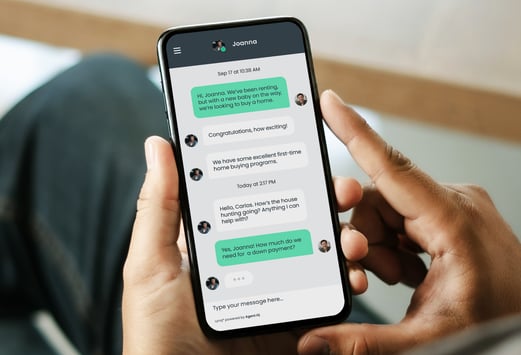
Imagine an account holder asking about buying their first home.
They are not ready for a mortgage yet. They are trying to understand how much they need for a down payment and whether they are saving enough each month.
A few weeks later, they come back with another question.
If the conversation starts from scratch, the institution may know plenty about their accounts but very little about what they are actually trying to accomplish.
A better experience remembers the conversation.
An even better one does not necessarily wait for them to come back.
If that account holder has an assigned banker or relationship manager, imagine that person reaching out a few weeks later:
How is the house savings going? Anything I can help you think through?
In another service model, the outreach might come from a pooled team or specialist instead. The point is the same.
Personalization is not just knowing what to say when someone contacts you. It is knowing enough about the relationship to recognize when it might be useful to start the next conversation.
That feels very different from putting someone's first name in an email.
J.D. Power's 2026 research found that only 20% of bank customers said their provider always personalized the information they received. Satisfaction was significantly higher when institutions got personalization right.
How can banks personalize customer interactions using AI?
AI can make context much easier to use.
It can help understand what an account holder is asking about, summarize previous conversations, retrieve relevant information, and identify what may need to happen next.
That does not mean every interaction should become an AI interaction.
For a routine question, AI may be able to provide an immediate answer. But if someone is thinking about buying a home, growing a business, managing debt, or making another important financial decision, there may be more value in bringing a person into the conversation.
AI can help make that person better prepared.
With Lynq AI, an account holder can move from digital self-service into authenticated, persistent messaging with an employee while carrying the context forward.
Agent IQ provides AI-powered relationship banking technology that helps banks and credit unions deliver personalized financial conversations at scale. Through its Lynq platform, financial institutions can connect AI-powered self-service, authenticated messaging, and proactive outreach to create more continuous, contextual interactions between account holders and employees.
The technology supports the conversation. It should not become the conversation.
Where does proactive outreach fit into personalization?
This is where personalization can become much more valuable.
Most personalization happens after an account holder does something. They visit a page, ask a question, or trigger a campaign.
But the institution may already know enough to recognize a useful next moment.
That first-time homebuyer may benefit from a follow-up. An account holder with a maturing CD may want to talk through options before the maturity date. Someone who started an application but stopped halfway through may simply need help.
The right outreach at the right moment shows that the institution was paying attention.
Channel matters too.
A phone call may go unanswered. An email can disappear into an inbox. A push notification can reach the account holder directly on the device they already use for digital banking.
With Lynq, financial institutions can use push notifications to initiate timely outreach, then continue the interaction through authenticated, persistent messaging.
That turns personalization from a one-time message into an ongoing conversation.
Does personalized banking require a dedicated banker?
No.
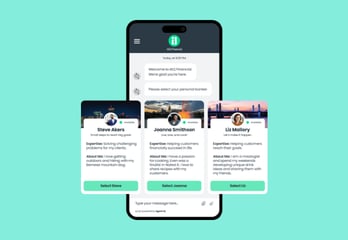
A commercial client might have an assigned relationship manager. Another account holder may be served by a contact center, branch team, specialist, or pooled digital service team.
Personalization has to work across all of those models.
The goal is not to promise everyone their own banker. It is to make sure the person helping them has enough context to understand the relationship and continue the conversation intelligently.
That is how personalized financial conversations begin to scale.
How does Agent IQ help banks and credit unions personalize conversations at scale?
Agent IQ helps banks and credit unions deliver personalized financial conversations through Lynq, its relationship banking platform. Lynq combines digital engagement, authenticated persistent messaging, and proactive outreach to help financial institutions maintain context across interactions and connect account holders with the appropriate employees.
By allowing conversations to continue over time, Lynq helps institutions deliver more personalized service without requiring every account holder to have a dedicated relationship manager. The result is a more scalable approach to relationship banking that supports both digital convenience and human engagement.
When does personalization become too much?
There is a line between helpful and intrusive.
A reminder about something an account holder has already discussed with the institution can feel useful. An unexpected recommendation based on a misunderstood transaction may not.
The question should always be: Does this context help us serve this person better?
Good personalization depends on appropriate access, trusted information, thoughtful governance, and human judgment about when to act.
What should financial institutions look for?
Personalization technology should help an institution:
- Remember context. Understand previous conversations and relevant needs.
- Recognize the next moment. Identify when useful outreach may be appropriate.
- Continue the conversation. Avoid forcing account holders to start over.
- Connect the right people. Route interactions according to the institution's service model.
- Make employees smarter. Give them relevant, trusted information when they need it.
The objective is not personalization for its own sake.
It is creating an experience where the account holder feels like their financial institution knows them well enough to be useful.
Sometimes that means answering the question they asked.
Sometimes it means remembering what they told you last time.
And sometimes it means reaching out before they have to ask.
Frequently asked questions
- What is banking personalization software?
- Banking personalization software helps financial institutions use relevant account holder context, interaction history, and trusted information to make service, guidance, and outreach more relevant.
- Can AI personalize banking conversations?
- Yes. AI can help understand inquiries, surface previous context, provide answers, and prepare employees for more informed conversations.
- How does proactive outreach support personalization?
- Proactive outreach allows a financial institution to use what it already knows to initiate a useful conversation at the right moment, rather than waiting for the account holder to return.
- Does personalized banking require a dedicated relationship manager?
- No. Personalized service can work across assigned bankers, pooled teams, contact centers, branches, and specialists as long as relevant context follows the conversation.