<img height="1" width="1" style="display:none;" alt="" src="https://px.ads.linkedin.com/collect/?pid=7937762&amp;fmt=gif">
Skip to content

Features > Customer context

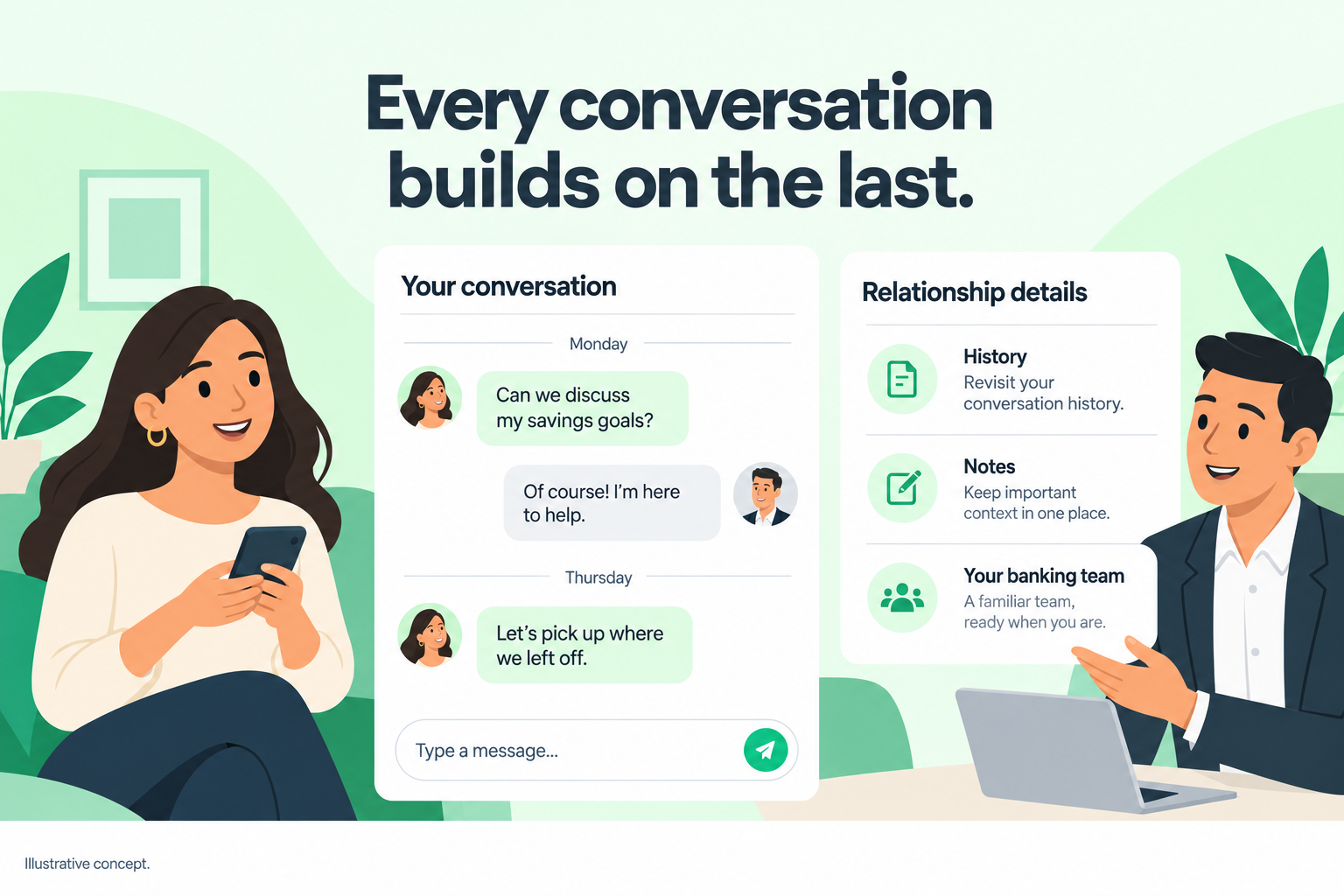
Every conversation builds on the last.

Give your team the history and details to make each interaction more personal. Preserve relationship context so account holders can continue the conversation without starting over.

Illustrative ongoing banking conversation alongside relationship history, notes, and banking-team details.

Customer context at a glance

The details behind a stronger relationship.

Available information depends on your institution’s configuration and employee permissions.
03_card_1_icon_40x40px

Conversation history

Revisit past exchanges to understand what has already been discussed.
03_card_2_icon_40x40px

Account-holder details

Keep relevant information in view to support more personal conversations.
03_card_3_icon_40x40px

Relationship assignments

See the employees and teams supporting each account holder.
03_card_4_icon_40x40px

Notes and reminders

Capture important details and keep follow-up needs in sight.
03_card_5_icon_40x40px

Files and documents

Refer back to documents shared during the conversation.
03_card_6_icon_40x40px

Outreach activity

Review campaign activity for context on previous outreach.

How customer context works

Pick up with understanding.

Lynq® brings relationship history and supporting details into the employee experience, helping your team prepare, respond, and follow through.
  1. Review previous conversations before responding
  2. Refer to relevant details, notes, and shared files
  3. Understand who supports the relationship
  4. Record what matters and set reminders for follow-up
Illustrative relationship context showing conversation history, shared documents, and follow-up reminders.

Designed for better service

Less repetition. More personal support.

For account holders

Continue the conversation, not the explanation.

Give employees the background to build on earlier discussions and reduce the need for account holders to repeat themselves.
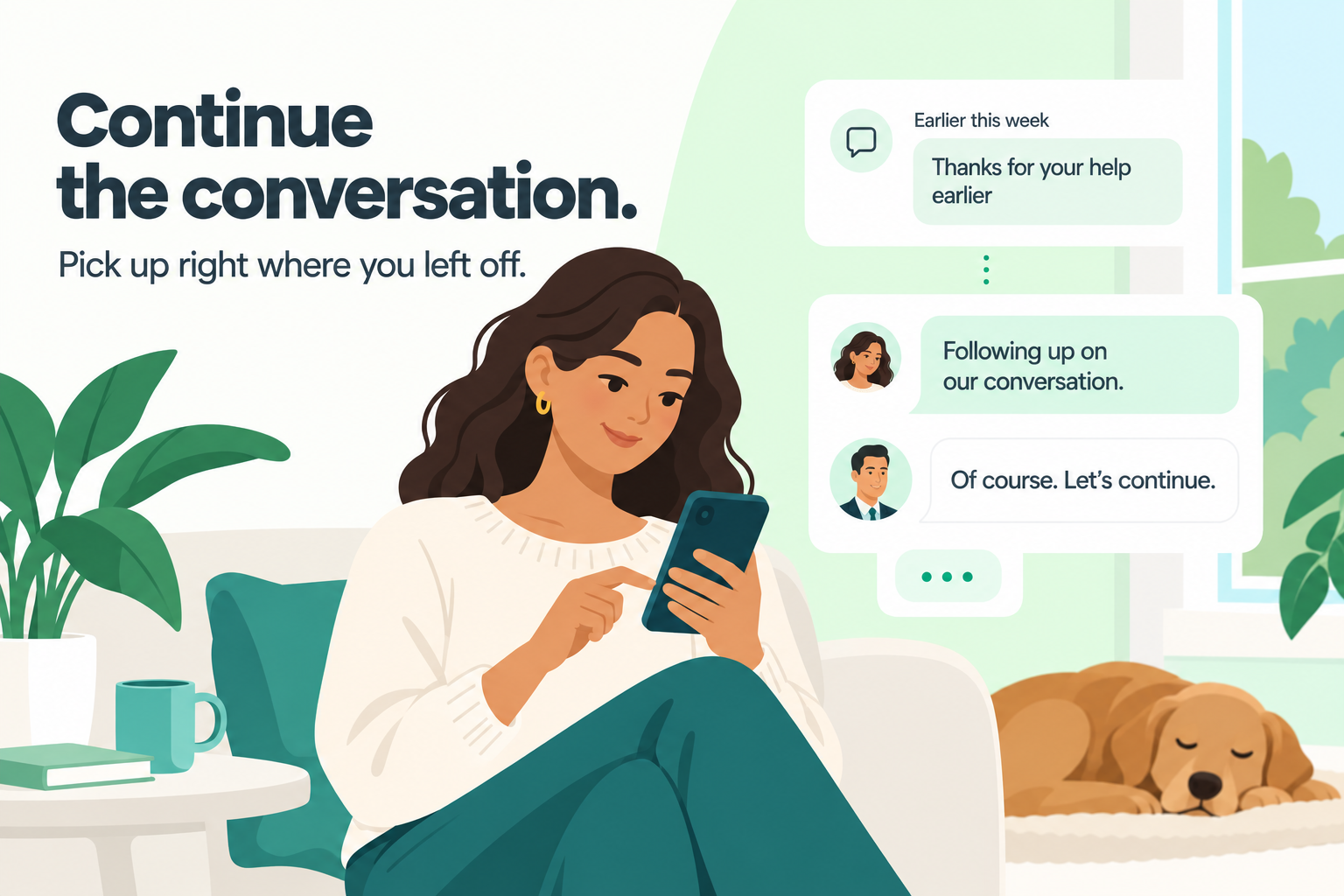
Illustrative account holder returning to an earlier conversation with a banker.

For employees

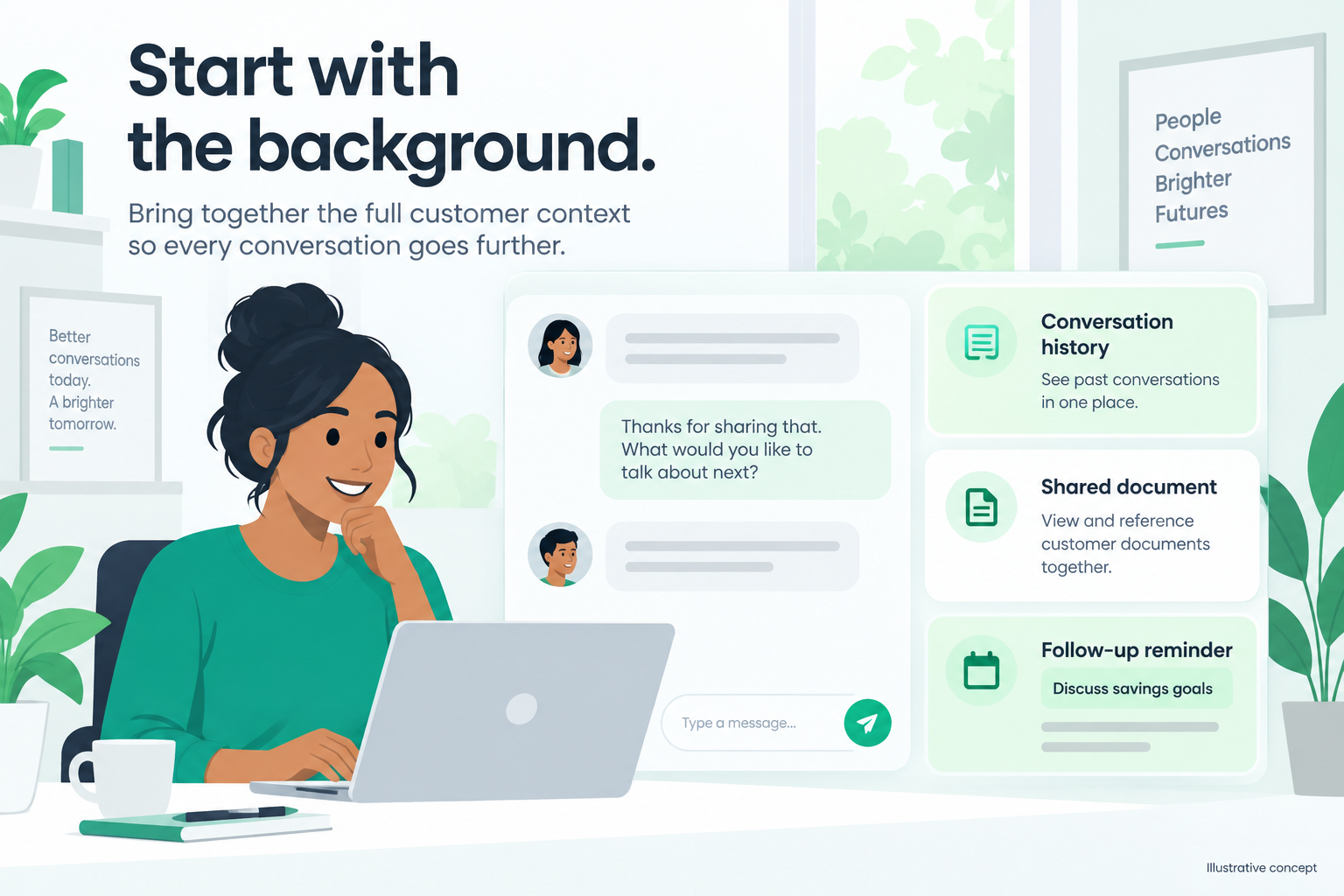
Start with the background that matters.

Review the conversation history and relationship details to understand the request before moving it forward.
Illustrative employee view of conversation history, a shared document, and a follow-up reminder.

For managers

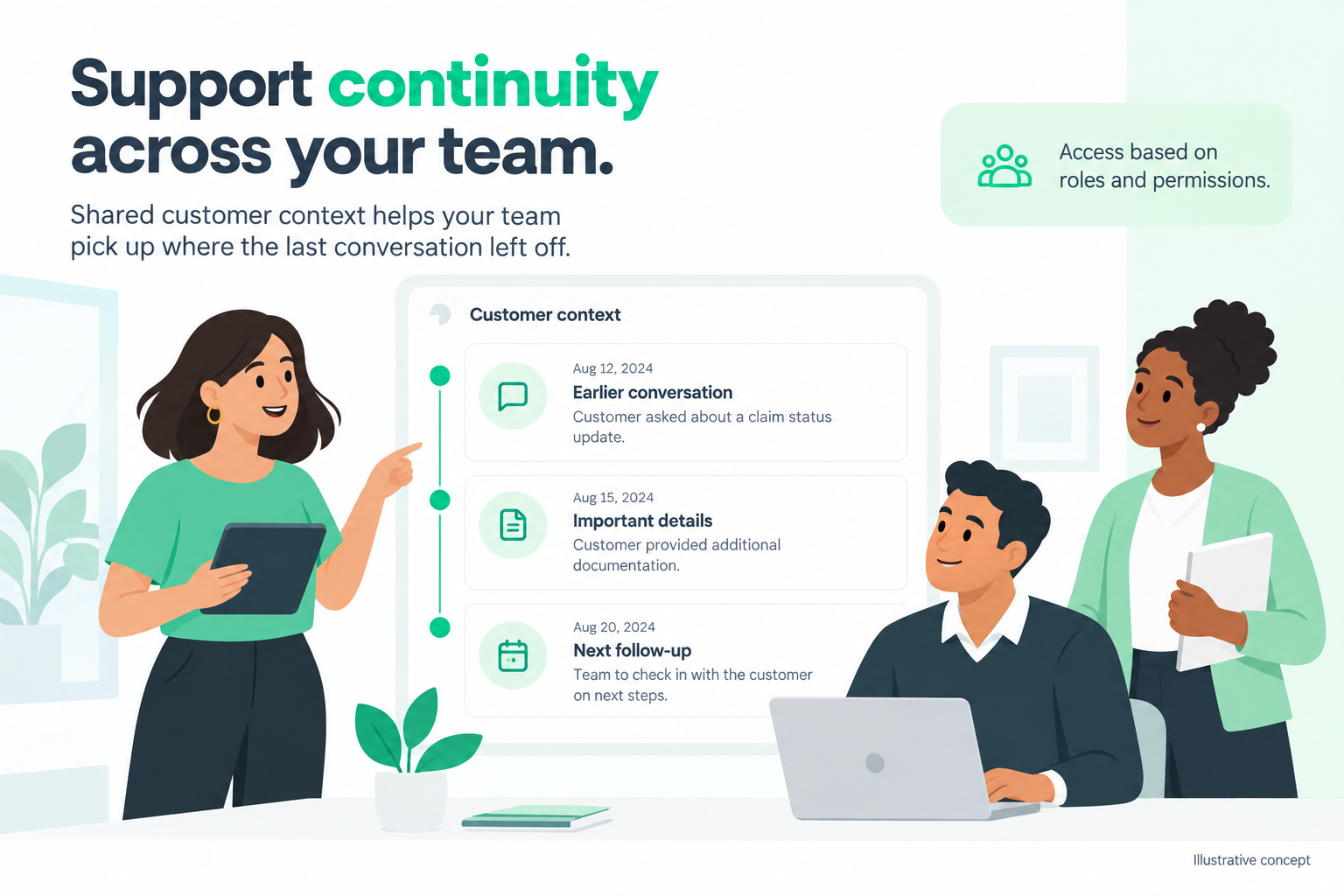
Support continuity across your team.

Help authorized employees draw on the same relationship history, whether service is dedicated, team-based, or pooled.
Illustrative banking team using relationship history and follow-up details, with access based on roles and permissions.

Connected support

Put relationship context to work.

06_card_1_icon_40x40px

Authenticated messaging

Maintain persistent conversations within digital banking, with history that supports the relationship over time.
06_card_2_icon_40x40px

Relationship models

Support continuity across dedicated employees, teams, pooled service, or a combination of approaches.
06_card_3_icon_40x40px

Proactive outreach

Use previous conversations and outreach activity to inform a more relevant follow-up.

Built for financial institutions

Trust is part of the experience

07_card_1_icon_40x40px

Role-based access

Manage employee access through configured roles and permissions.
07_card_2_icon_40x40px

Configured information

Shape the account-holder information available to your team around your institution’s setup.
07_card_3_icon_40x40px

Sensitive-content controls

Support careful handling of sensitive message content with manual and configured masking.

Connected capabilities

Frequently asked questions

What is customer context?
Customer context is the history and supporting information that helps employees understand an account-holder relationship. It can include conversations, account-holder details, assigned employees, notes, reminders, files, and outreach activity.
How is it different from authenticated messaging?

Authenticated messaging provides the persistent conversation within digital banking. Customer context helps employees use that history, alongside other relationship details, to provide informed and continuous support.

Does customer context require a dedicated employee?
No. It can support dedicated, team, pooled, and hybrid relationship models. Employee access depends on the institution’s configuration and permissions.
What information can employees see?
Available information depends on your institution’s configuration and employee permissions. Context can include relationship details, conversation history, notes, reminders, classifications, feedback, files, and campaign activity.