Proactive banking engagement means reaching out to account holders with timely, relevant guidance before they have to ask for it. Done well, it can reduce friction, strengthen relationships, increase loyalty, and create more opportunities for a financial institution to help.
Most financial institutions are still built around a reactive service model.
An account holder has a question. They open the app, start a chat, call, send an email, or visit a branch. Then the institution responds.
But there are plenty of moments when the institution already knows enough to be helpful first. A payment is coming due. An application was started but not finished. A certificate is nearing maturity. A previous conversation still needs a follow-up.
Those are not necessarily marketing moments. They are relationship moments.
What does proactive engagement actually look like?
Proactive engagement can take many forms, including phone calls, email, text messages, push notifications, and in-app messaging.
The channel matters.
Phone calls can be personal, but many consumers do not answer numbers they do not recognize. Email is familiar and scalable, but important messages can easily get buried or filtered into spam.
Push notifications can be more immediate because they reach account holders directly on the device they already use for digital banking.
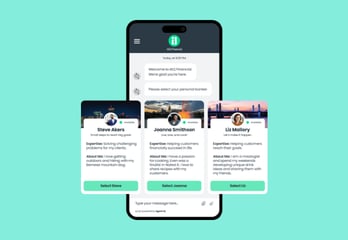
Agent IQ's Lynq platform enables banks and credit unions to use push notifications to initiate timely outreach and continue the interaction through authenticated, persistent messaging.
The goal is not simply to send a message. It is to make sure the outreach is noticed and easy to act on.
How can banks deliver proactive service without feeling intrusive?
The answer is not more messages. It is better timing and better context.
Deloitte’s 2026 banking research found that 91% of surveyed bank customers are at least moderately interested in proactive support, and 71% agree that companies should anticipate and solve problems before customers reach out. Yet only 37% said they had actually received proactive support.
People are open to help before they ask, but only when the outreach feels useful.
A message that says, “We noticed your CD matures next month. Would you like to talk through your options?” feels very different from another generic product promotion.
Good proactive engagement starts with a reason.
Why does personalization matter?
Because relevance is what separates proactive service from noise.
Sometimes personalization is as simple as knowing what was discussed last time, understanding where someone is in a journey, or making sure the right employee or team follows up.
Some account holders may work with a dedicated relationship manager. Others may be served by a pooled team, specialist, contact center, or a combination.
The account holder does not need to understand that structure. They simply need to feel that the institution understands why it is reaching out.
Why is proactive outreach important after onboarding?
Opening the account is the beginning of the relationship, not the end of the acquisition process.
Financial institutions invest heavily in getting someone to open an account or complete an application. But if the institution becomes quiet immediately afterward, there is little keeping that relationship from becoming transactional.
That makes it easier for another provider to win the next deposit, loan, credit card, or financial relationship.
Engagement after onboarding gives financial institutions a way to keep demonstrating value. That could mean helping someone complete setup, introducing a useful feature, checking in after a major transaction, or providing guidance around a financial need.
Those interactions can make the relationship stickier because the account holder has more reasons to engage beyond simply checking a balance or completing a transaction.
Over time, that can build loyalty, deepen the relationship, and increase share of wallet.
The opportunity is to become more than the place where someone keeps an account. It is to become a trusted financial resource.
Where should AI fit into proactive banking engagement?
AI in proactive banking should help financial institutions identify when an account holder may need assistance, surface relevant context, and help employees determine the appropriate next action. Rather than replacing the human relationship, AI can help bankers recognize opportunities to engage earlier and more intelligently.
For example, AI can help identify patterns or signals that suggest outreach may be useful, such as an incomplete application, an upcoming maturity, a change in account activity, or a previous conversation that requires follow-up. It can also bring together relevant information so employees understand why the outreach is happening and what has already occurred.
But the value of AI is not in generating more messages.
Its value is in helping institutions understand when there is a reason to engage and giving employees the context they need to continue the conversation intelligently.
A proactive notification might start the interaction. The response may then require a relationship manager, specialist, or service team to step in.
That is where technology and human judgment work together.
What makes proactive engagement work in practice?
A simple framework helps:
- Start with a real need. Outreach should solve something, prevent friction, or create genuine value.
- Choose a channel that will be noticed. A good message has little value if the account holder never sees it.
- Make it easy to respond. Do not send a notification and then make someone search for the right place to continue.
- Keep the context. The institution should know what triggered the outreach and what has already happened.
- Route to the right support. That may be a relationship manager, specialist, pooled team, or service group.
The best proactive engagement does not feel like another campaign.
It feels like the institution was paying attention.
Frequently asked questions
- What is proactive banking engagement?
-
Proactive banking engagement is the practice of reaching out to account holders with timely, relevant support, guidance, or opportunities before they initiate contact.
- What channels can financial institutions use for proactive engagement?
-
Common channels include phone, email, text, push notifications, and in-app messaging. The right channel depends on the situation, but visibility and ease of response are critical.
- How can banks increase engagement after onboarding?
-
Continue delivering value through useful check-ins, reminders, education, and guidance. Consistent engagement can strengthen loyalty, improve retention, and create opportunities to deepen the relationship.
- Why are push notifications useful for proactive banking engagement?
-
Push notifications can put relevant outreach directly in front of an account holder and, when connected to persistent messaging, create an immediate path from notification to conversation.